
Compact Fluid Handling System for Automated Sample Transfer and Pipetting
This system combines fluidics, electronics, software, and mechanical motion into a compact automated liquid handling platform with automated pipetting head, moving well plate platform, The Bartels Pump | BP7 micropump, micro valves, and custom electronics.
What Is a Fluid Handling System?
A fluid handling system controls how liquids are transported, dispensed, mixed, or monitored within a device.
These systems are used in many industries, including:
- Point-of-care diagnostics
- Medical technology
- Laboratory automation
- Life sciences
- Pharmaceutical development
Modern fluid handling systems often combine multiple technologies in one compact architecture.
These include:
- Pumps
- Valves
- Electronics
- Software
- Sensors
- Mechanical motion systems
At Bartels Mikrotechnik, we develop miniature fluidic components and custom fluidic solutions that help OEMs create compact and reliable fluidic products.
Our portfolio includes micropumps, valves, sensors, control electronics, bubble traps, pulsation dampers, and complete system solutions.
A Demonstrator for Automated Sample Transfer

At a recent trade fair, Bartels Mikrotechnik presented a demonstrator designed to showcase advanced liquid handling in a highly compact footprint.
The setup is based on a small 3D-printer-style platform.
During operation, the motion system positions the pipetting head and moves between different well plate locations. This enables automated sample transfer between well plate chambers and demonstrates a typical laboratory workflow.
The demonstrator was developed to show how miniature fluidic components can be combined with electronics, software, and mechanical motion to create an integrated fluid handling solution.
The platform includes:
- The Bartels Pump | BP7 micropump
- Four active 2/2-way micro valves from memetis
- A custom-developed fluidic manifold
- A custom PCB
- Dedicated control electronics
- Software-controlled operation
The result is a compact fluid handling system capable of automated dosing, sample transfer, and precise liquid movement.
Key Features
- Self-sustaining operation
- Pressure-driven fluid transport
- Automated sample transfer
- Automated pipetting
- Compact footprint
- Digital control
- Modular architecture
- OEM-ready design
The custom-developed pipetting head integrates multiple fluidic components into a highly compact assembly.
Building a Compact Fluid Handling System with The Bartels Pump | BP7

At the core of the demonstrator is The Bartels Pump | BP7.
The BP7 is a miniature piezoelectric micropump designed for precise liquid transport. Its compact size makes it ideal for applications where installation space is limited.
However, a pump alone does not create a complete fluid handling system.
Many applications require:
- Sample aspiration
- Liquid dispensing
- Fluid routing
- Process automation
- Digital control
For this reason, the demonstrator was developed as a complete system rather than a collection of individual components.
The project illustrates how fluidics, electronics, software, and mechanics can be combined to create functionality that extends well beyond simple liquid transport.
Core Fluidic Components Used Inside the Demonstrator
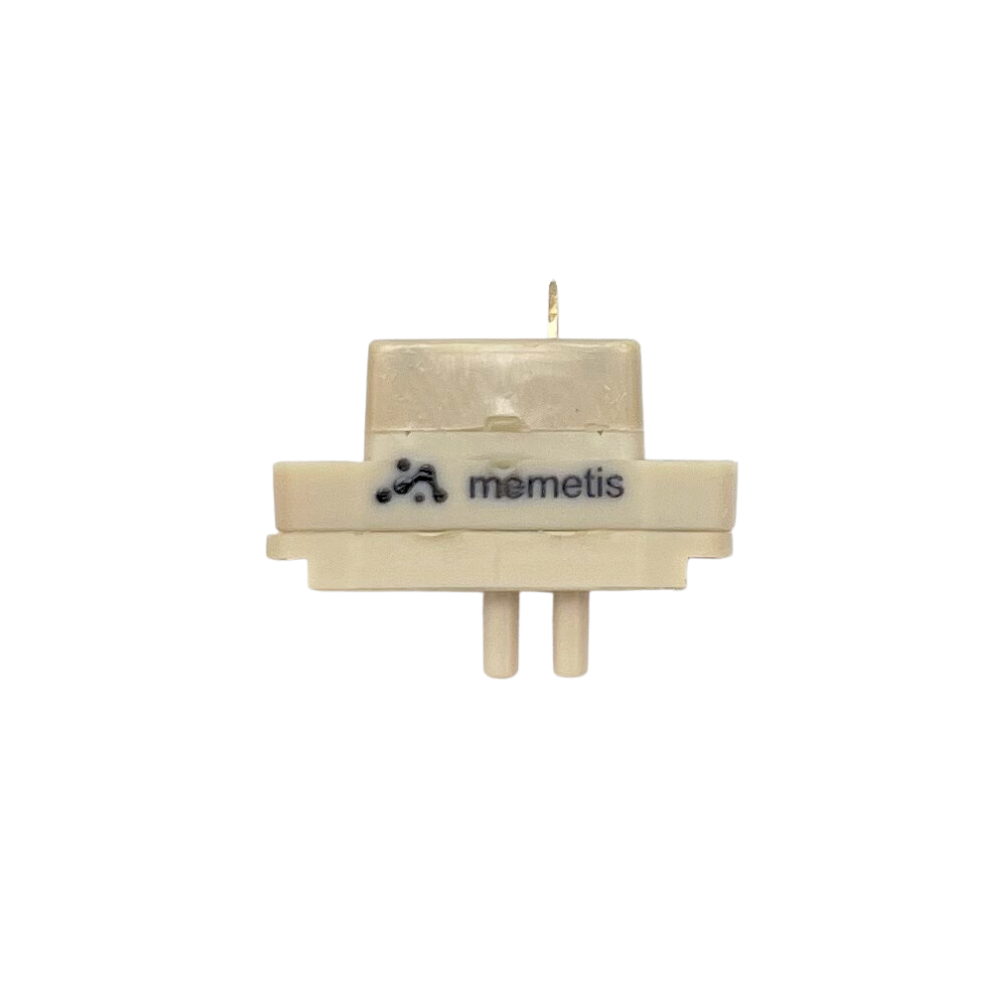
A critical part of the demonstrator is the integration of four active 2/2-way micro valves from memetis.
The normally closed valves enable precise fluid routing while maintaining the compact system footprint required for miniature fluidic devices.
Their small size and fast switching behavior make them particularly suitable for liquid handling applications where space is limited.
Together, the BP7 micropump and memetis valve technology demonstrate how specialized fluidic components can be combined to create advanced functionality within a compact system architecture.
Fluidic Architecture and Flow Reversal Concept
Visitors can immediately see which fluid handling step is currently performed.
One of the key engineering challenges was enabling flexible liquid movement within the system.
The BP7 naturally pumps liquid in one direction.
To expand its capabilities, Bartels engineers developed a custom fluidic architecture using four active micro valves from memetis.
The valves are arranged around the pump and controlled through dedicated electronics.
By switching valve states in a defined sequence, the fluid path can be changed dynamically.
This allows the system to:
- Aspirate liquids
- Dispense liquids
- Transfer samples between locations
- Move liquids back and forth through fluidic structures
- Support fluid mixing concepts with low dead volume
This setup demonstrates how intelligent fluidic design can significantly extend the capabilities of compact micropumps.
The custom fluidic architecture combines one BP7 micropump with four active micro valves to enable flexible liquid routing.
Visualizing the Liquid Handling Process
The demonstrator was designed to make fluid movement easy to understand during live presentations.
Visual feedback is provided through integrated LEDs.
- Red LEDs indicate liquid uptake
- Blue LEDs indicate liquid dispensing
This simple visualization helps explain the operation of the system while highlighting the precision of the automated workflow.


Red LEDs indicate aspiration while blue LEDs indicate dispensing.
From Components to Custom Fluidic Solutions
The demonstrator is not intended as a final product.
Instead, it serves as a technology platform that illustrates the possibilities of system-level engineering.
The system demonstrates Bartels Mikrotechnik’s holistic and multidisciplinary engineering approach: Custom PCB, fluidic manifold, tubing layout, valves, and electronics integrated within the demonstrator.
Our engineering teams combine expertise in:

Fluidics
- Micropumps
- Valves
- Sensors
- Bubble traps
- Pulsation dampers
- Fluidic manifolds
- Accessories
Electronics
- Control boards
- Driver electronics
- Embedded systems
- Communication interfaces
Software
- Device control
- Automation
- User interfaces
- Data handling
Engineering
- Fluidic design
- Mechanical integration
- Rapid prototyping
- Application development
This interdisciplinary approach enables us to develop custom fluidic solutions tailored to specific OEM requirements.
Future versions of similar systems can also integrate sensing technologies for monitoring, process control, and automated documentation.
Why OEMs Are Looking for Compact Fluid Handling Systems
OEM manufacturers face increasing pressure to reduce system size while improving performance.
At the same time, devices need to become easier to integrate and operate.
Compact fluid handling systems help address these challenges.
By combining pumps, valves, electronics, software, and application knowledge into one architecture, complexity can be reduced while functionality increases.
This is exactly the principle behind Bartels Mikrotechnik’s approach to custom fluidic solutions.
Conclusion
The demonstrator shows how a modern fluid handling system can combine automated sample transfer, pipetting, and intelligent liquid control within a highly compact footprint.
By integrating The Bartels Pump | BP7, four active micro valves from memetis, custom electronics, software, and a dedicated fluidic manifold, Bartels Mikrotechnik created a platform that demonstrates the potential of miniaturized fluidic systems.
More importantly, the project highlights a core belief shared across all our developments:
Successful fluidic products are built as systems.
When fluidics, electronics, software, mechanics, and application expertise are developed together, new possibilities emerge for diagnostics, laboratory automation, and next-generation OEM devices.